Distributed Quantum Computing Systems and Infrastructure Workshop
QCE 2026
IEEE Quantum Week
Held in conjunction with QCE'26
Call openDQC-SI invites submissions of original research, work-in-progress, and position papers — up to 4 pages, IEEE format. Submit via EasyChair →
An IEEE QCE 2026 Workshop
Distributed Quantum Computing Systems and Infrastructure
A workshop establishing cross-layer infrastructure as a foundational paradigm for scalable, networked quantum systems — connecting physical-layer constraints, quantum networking, system software, and applications.
Host Conference
IEEE QCE 2026IEEE Quantum Week
Format
Half / full dayInvited talks · peer-reviewed papers · discussion
This workshop explores systems and infrastructure for Distributed Quantum Computing (DQC), with an emphasis on how coordinated design enables scalable multi-QPU execution. Attendees will gain insights into integrating physical, network, system, and application layers to improve scalability, reliability, and overall efficiency in DQC.
As quantum computing systems continue to scale, DQC has emerged as a promising paradigm to overcome the limitations of individual quantum processors. Multiple quantum processing units (QPUs) are interconnected through quantum networks, enabling them to collaboratively execute computational tasks that exceed the capabilities of a single device. This shift from isolated processors to interconnected systems represents a fundamental step toward scalable quantum computing.
However, current approaches largely treat system layers in isolation, separating physical-layer constraints, network protocols, and application-level execution, which leads to inefficiencies in scalability and reliability. By explicitly connecting these layers, cross-layer approaches capture the interplay between hardware limitations, communication processes, and application requirements — enabling more efficient and scalable system designs. The long-term vision is to enable efficient quantum data centers and networked quantum systems that support large-scale scientific and industrial applications.
From isolated processors to interconnected quantum systems.
Cross-layer · Multi-QPU · Scalable
Cross-layer perspective
DQC-SI emphasizes integration across the full quantum systems stack, treating each layer's constraints as inseparable from the others:
Application
Distributed quantum algorithms — hybrid quantum-classical workloads, applications enabled by multi-QPU execution, and program-level abstractions over networked devices.
System / Software
Compilers, runtimes, and middleware — network-aware circuit partitioning, distributed circuit execution, and system software that orchestrates multi-QPU workloads.
Network
Quantum interconnects — entanglement routing, resource management, and topology design for the quantum links that bind QPUs together.
Physical / Link
Hardware foundations — physical-layer constraints of qubit interconnects, link-layer protocols, and the device characteristics that bound what the upper layers can achieve.
Objectives
The workshop focuses on advancing cross-layer infrastructure for distributed quantum computing (DQC) by bringing together researchers from quantum computing, networking, systems, and applications. Through talks and discussions, it will highlight key challenges, emerging solutions, and state-of-the-art approaches for scalable quantum systems, while fostering interdisciplinary collaboration and community building around shared frameworks, benchmarks, research directions, and future collaborative efforts in DQC.
02 / Call for Papers
Call for papers
We invite original research, work-in-progress papers, and position papers on cross-layer infrastructure for distributed quantum computing.
DQC-SI workshop papers will be included in the QCE'26 Proceedings. Submissions must follow the IEEE conference format — 4 pages maximum including references, with 24 pt title and 10 pt main text. LaTeX users should use \documentclass[10pt, conference]{IEEEtran} without the compsoc options.
Review will be single-blind; author names and affiliations should be included. All submissions are peer-reviewed by the workshop program committee and must comply with the IEEE Policy on Authorship.
Topics of interest
Topics include, but are not limited to:
01System and infrastructure design for DQC
02Network-aware quantum circuit partitioning
03Distributed circuit execution and compilation
04Quantum interconnects and network topologies
05Quantum systems software, compilers, and middleware for distributed execution
06Quantum networking, entanglement routing, resource management for DQC
DQC-SI is organized as three 90-minute sessions spanning DQC foundations, systems and networks, and distributed circuits, fault tolerance, and applications.
Official QCE session times and room are shown below. For the host conference listing, see the QCE'26 workshop schedule.
Session 1Foundations, Perspectives, and Limits of DQC
Hypergraph-Based Parity Network Synthesis for Efficient Distributed Quantum Circuits
Khang Nguyen, Sam Winnick and Matt Amy
3:38-3:51 PM
Paper #1855
Design Rules for Fault-Tolerant Multi-Gate Teleportation
Mathys Rennela
3:51-4:04 PM
Paper #1986
Distributed Quantum Error Correction with Bivariate Bicycle Codes via a Modular Architecture
Nitish Chandra, Eneet Kaur, Reza Nejabati and Kaushik P. Seshadreesan
4:04-4:17 PM
Paper #1870
Coordinating Partitioned QAOA for Pairwise-Constrained Clustering
Pedro Chumpitaz, Ying Mao and Kaixun Hua
4:17-4:30 PM
Paper #1800
Structured-Output Preservation and Quantum-Origin Command Mesh Handoff as a Distributed Quantum Computing Readiness Primitive
Frank Drew
04 / Organizers & Committee
Organizers & committee
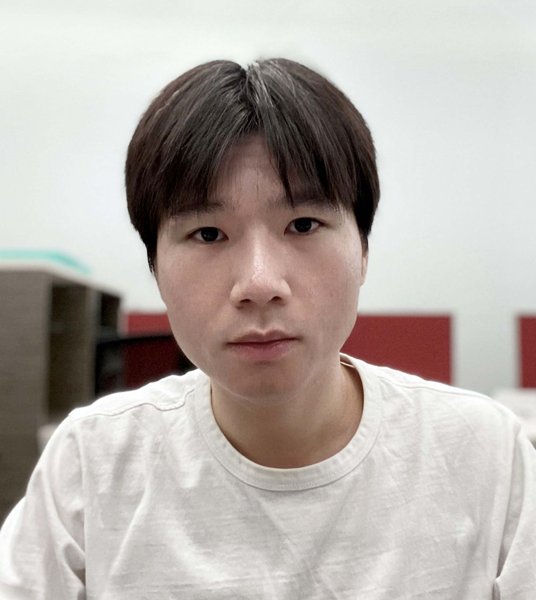
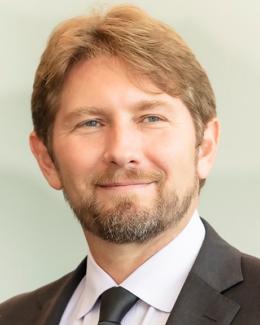
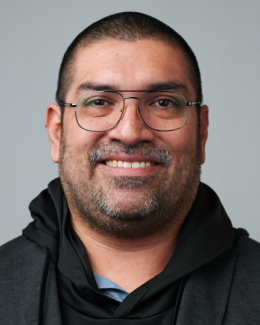
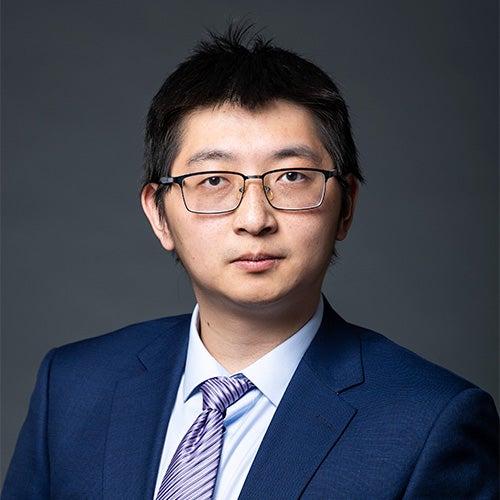
DQC-SI is organized by a team spanning Florida Atlantic University, Oak Ridge National Laboratory, and George Mason University, with a program committee drawn from across academia.
Attendance information, target audience, and how to follow workshop announcements.
DQC-SI is held in conjunction with IEEE Quantum Week (QCE 2026). Workshop attendance is included with QCE'26 registration; see the host conference for registration tiers and venue details once announced.
Logistics
Host conference
IEEE Quantum Week — QCE 2026
Format
In-person workshop with invited talks and peer-reviewed contributed papers
Registration
Via the QCE'26 conference portal (link forthcoming)
Proceedings
Included in the QCE'26 Proceedings via IEEE Xplore
— Host conference
IEEE QCE 2026
The IEEE International Conference on Quantum Computing and Engineering — "IEEE Quantum Week" — is the flagship annual venue for the quantum computing community, organized by the IEEE Computer Society.
This workshop targets researchers and practitioners in quantum computing, quantum networking, computer systems, and applications — particularly those interested in scalable and distributed quantum infrastructures. It is also relevant to researchers in computer architecture, distributed systems, and high-performance computing exploring the integration of quantum technologies into larger computing ecosystems.
The workshop is designed to be accessible to participants with a general background in quantum computing or computer systems, with introductory context provided to ensure a common understanding across disciplines. Expertise in specific subfields (e.g., networking or systems) is not required. We aim to attract a diverse mix from academia, industry, and national laboratories.
Stay informed
For workshop updates, important dates, and the call for papers, please contact the workshop organizers — particularly the main contact, Dr. Zebo Yang (yangz@fau.edu). Announcements will also be distributed via QCE'26 channels and academic networks including LinkedIn.